Abstract
Across Sub-Saharan Africa, persistent misalignment between education systems and labour market structures has constrained the translation of educational expansion into equitable employment outcomes. In response to graduate unemployment and skills mismatch, Tanzania introduced the National Framework for Academia-Industry Collaboration in Skills Development and Employability in 2026 to institutionalize governance coordination, strengthen work-based learning, and enhance labour market responsiveness. While the framework adopts a demand-driven orientation, the extent to which it embeds structural inclusion mechanisms remains insufficiently examined. This paper undertakes a systematic qualitative policy review of the framework to interrogate its governance architecture, demand-alignment logic, and inclusion provisions. Guided by systems theory, human capital perspectives, and intersectionality frameworks, the analysis evaluates the framework against international models of skills governance and labour inclusion. Findings indicate that the framework demonstrates structural coherence in institutional coordination and industry engagement; however, it lacks explicit disability-disaggregated labour data systems, employer accommodation financing mechanisms, and intersectional monitoring indicators necessary to prevent the reproduction of labour market inequalities. This study contributes to the literature by integrating systems theory with intersectionality-informed disability studies to evaluate skills governance beyond economic responsiveness alone. The paper argues that demand-driven skills development, when detached from legally embedded inclusion safeguards and disability-responsive financing instruments, risks reinforcing gendered and disability-based disparities in employment outcomes. It concludes that Tanzania’s framework constitutes a significant policy reform platform but requires structural integration of inclusive governance mechanisms to ensure equitable participation and sustainable employability in the evolving labour market. It concludes that Tanzania's framework provides a strong foundation for reform but should be strengthened through disability-responsive labour market information systems, employer accommodation incentives, accessible work-based learning standards, and intersectional accountability mechanisms to ensure inclusive and sustainable skills development.
|
Published in
|
Innovation Economics (Volume 1, Issue 4)
|
|
DOI
|
10.11648/j.iecon.20260104.14
|
|
Page(s)
|
175-186 |
|
Creative Commons
|

This is an Open Access article, distributed under the terms of the Creative Commons Attribution 4.0 International License (http://creativecommons.org/licenses/by/4.0/), which permits unrestricted use, distribution and reproduction in any medium or format, provided the original work is properly cited.
|
|
Copyright
|
Copyright © The Author(s), 2026. Published by Science Publishing Group
|
Keywords
Demand-driven Skills Development, Academia-industry Collaboration, Disability Inclusion, Intersectionality,
Work-based Learning, Tanzania
1. Introduction
Across Sub-Saharan Africa, youth unemployment cannot be reduced to a simple deficit of jobs; it reflects a structural incongruity between expanding education systems and labour markets undergoing technological, sectoral, and productivity transformations. While enrolment in secondary and tertiary education has increased substantially, the absorptive capacity of formal labour markets has lagged, generating what development scholars describe as a credential-employment disjuncture
| [29] | United Republic of Tanzania (URT). (2026). National framework for academia-industry collaboration in skills development and employability. Ministry of Education. Retrieved from the Ministry of Education. Retrieved from the Ministry of Education website. |
[29]
. In response, governments have increasingly embraced demand-driven skills reforms premised on tighter institutional coupling between education providers and industry actors. Comparative models such as Germany's dual vocational system emphasize legally embedded apprenticeship structures and employer co-governance
| [10] | Fürstenau, B., Pilz, M., Gonon, P. The Dual System of Vocational Education and Training in Germany: What Can Be Learnt About Education for (Other) Professions. In: Billett S, Harteis C, Gruber H, editors. International Handbook of Research in Professional and Practice-Based Learning. Dordrecht: Springer; 2014. pp. 427-460.
https://doi.org/10.1007/978-94-017-8902-8_16 |
[10]
, while Singapore's SkillsFuture framework integrates labour market analytics with lifelong learning incentives to enhance employability responsiveness
| [16] | Lim, Z. Y., Yap, J. H., Lai, J. W., Mokhtar, I. A., Yeo, D. J., & Cheong, K. H. (2024). Advancing lifelong learning in the digital age: A narrative review of Singapore’s SkillsFuture programme. Social Sciences, 13(2), 73.
https://doi.org/10.3390/socsci13020073 |
[16]
. Within this paradigm, alignment is treated as the corrective mechanism to youth labour marginalization.
Yet this efficiency-oriented reform logic has been subjected to critical interrogation. Intersectionality scholars argue that labour markets are not neutral coordination systems but stratified institutional fields structured by power and identity
| [6] | Crenshaw, K. Demarginalizing the intersection of race and sex: A Black feminist critique of antidiscrimination doctrine, feminist theory and antiracist politics. In: Maschke K, editor. Feminist Legal Theories. New York, NY: Routledge; 2013. pp. 23-51. |
[6]
. Empirical analyses demonstrate that disability status, gender, and class interact to shape unequal employment trajectories even in contexts where vocational systems are well aligned to industry demand
. Disability studies further caution that productivity norms embedded in institutional arrangements may marginalize bodies and cognitive profiles that deviate from dominant labour expectations
| [11] | Garland-Thomson, R. (2005). Feminist disability studies. Signs: Journal of Women in Culture and Society, 30(2), 1557-1587.
https://doi.org/10.1086/423352 |
| [17] | Matha, Q. P., & Jahed, M. I. (2024). A Critique of the Techniques Used by the Sectoral Education and Training Authorities to Detect Skills Shortages in South Africa. Administratio Publica, 32(4), 156-175.
https://doi.org/10.61967/adminpub.2024.32.4.8 |
[11, 17]
. Thus, demand alignment alone does not necessarily translate into equitable participation; without structurally embedded inclusion mechanisms, skills systems may reproduce rather than disrupt existing labour hierarchies.
Evidence from other Sub-Saharan African countries further demonstrates that strengthening education-industry linkages alone does not necessarily produce equitable labour market outcomes. In South Africa, although the Skills Development Act and Sector Education and Training Authorities (SETAs) have strengthened employer participation in vocational education and training, recent evidence suggests that persistent challenges in identifying labour market skills needs and aligning institutional responses continue to constrain the effectiveness of the skills development system
| [17] | Matha, Q. P., & Jahed, M. I. (2024). A Critique of the Techniques Used by the Sectoral Education and Training Authorities to Detect Skills Shortages in South Africa. Administratio Publica, 32(4), 156-175.
https://doi.org/10.61967/adminpub.2024.32.4.8 |
[17]
. Similarly, research from Ghana shows that disability-related stigma and discriminatory employment practices continue to undermine the transition from education to employment despite improvements in educational access
| [20] | Naami, A. (2015). Disability, gender, and employment relationships in Africa: The case of Ghana. African Journal of Disability, 4(1), 1-11. https://doi.org/10.4102/ajod.v4i1.95 |
| [21] | Ocran, I. (2021). “There is something like a barrier”: Disability stigma, structural discrimination and middle-class persons with disability in Ghana. Disability & Society, 36(2), 255-275.
https://doi.org/10.1080/23311886.2022.2084893 |
[20, 21]
. These regional experiences suggest that explicit inclusion mechanisms must accompany institutional coordination if demand-driven skills reforms are to generate equitable employment opportunities across diverse population groups.
It is within this contested reform landscape that Tanzania's National Framework for Academia-Industry Collaboration in Skills Development and Employability (2026) must be situated. The framework seeks to institutionalize sector coordination, expand work-based learning (WBL), and align curricula with Labour Market Information Systems (LMIS) to improve labour market responsiveness
. However, whether its demand-driven architecture sufficiently integrates safeguards for intersectional inclusion remains analytically underexplored.
Against this background, this paper critically examines not the necessity of demand-driven reform, but the inclusivity of its institutional design. Specifically, it asks: To what extent does Tanzania's National Framework for Academia-Industry Collaboration embed structurally grounded mechanisms capable of ensuring equitable skills development and labour market participation across intersecting social positions? While previous studies of skills governance have primarily emphasized institutional coordination and labour market responsiveness, this study advances the discussion by integrating systems theory with intersectionality-informed disability studies to evaluate whether governance arrangements simultaneously promote economic efficiency and social justice. In doing so, the paper offers a broader analytical framework for assessing demand-driven skills development reforms in Tanzania and other Sub-Saharan African countries.
2. Theoretical Framework
This study integrates Systems Theory and Intersectionality-informed Disability Studies to interrogate the structural logic of Tanzania’s National Framework for Academia-Industry Collaboration. The selection of these theoretical lenses is deliberate. While systems theory explains institutional coordination and governance architecture, intersectionality interrogates how such systems distribute opportunity and constraint across differentiated social positions. Together, they allow analysis not only of whether the framework is structurally coherent, but also whether it is structurally equitable.
2.1. Systems Theory and Institutional Coordination
Systems theory conceptualizes institutions as interdependent components operating within structured environments, where interactions among subsystems determine overall system performance
| [3] | Bronfenbrenner, U. Making Human Beings Human: Bioecological Perspectives on Human Development. Thousand Oaks, CA: Sage Publications; 2005. |
| [12] | Härkönen, U. (2001). The Bronfenbrenner ecological systems theory of human development. |
[3, 12]
. Rather than viewing policy domains in isolation, systems thinking emphasizes feedback loops, boundary permeability, and adaptive governance. In the context of skills development, this perspective is particularly instructive because employability outcomes arise from the dynamic interactions among educational institutions, labour markets, regulatory bodies, and broader socio-economic structures.
Within skills governance, at least four critical subsystems interact:
1) Curriculum and training design institutions
2) Industry and employer bodies
3) Regulatory and accreditation agencies
4) Labour Market Information Systems (LMIS)
Where coordination among these subsystems is weak, credential production may occur without corresponding labour market absorption. Conversely, where systemic integration is institutionalized, transitions from education to employment become more coherent, efficient, and predictable.
Germany's dual vocational system is widely recognized as a paradigmatic example of systemic coupling. Apprenticeship contracts are legally embedded, industry chambers participate in curriculum regulation, and employers co-administer certification processes
| [7] | Deissinger, T., & Hellwig, S. (2005). Apprenticeships in Germany: Modernising the dual system. Education + Training, 47(4/5), 312-324.
https://doi.org/10.1108/00400910510601896 |
| [10] | Fürstenau, B., Pilz, M., Gonon, P. The Dual System of Vocational Education and Training in Germany: What Can Be Learnt About Education for (Other) Professions. In: Billett S, Harteis C, Gruber H, editors. International Handbook of Research in Professional and Practice-Based Learning. Dordrecht: Springer; 2014. pp. 427-460.
https://doi.org/10.1007/978-94-017-8902-8_16 |
[7, 10]
. This governance model creates institutional reciprocity through shared regulatory responsibility rather than advisory engagement alone.
Tanzania’s framework reflects systems logic in its establishment of the National Skills Coordination Council and Sector Skills Councils. However, systems theory also emphasizes enforceability and feedback integrity. Where institutional relationships are consultative rather than binding, system stability may remain fragile. Thus, systems theory enables evaluation not merely of structural presence, but of regulatory depth and accountability strength.
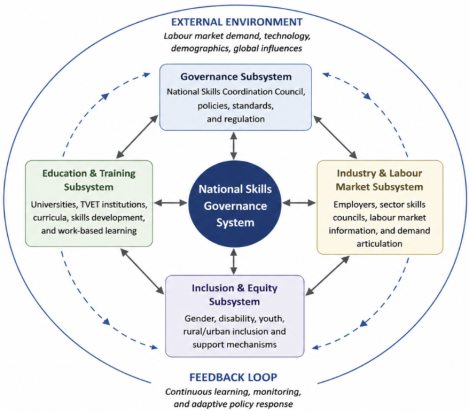
To clarify the institutional logic underpinning demand-driven skills reform,
Figure 1 presents the structural architecture of academia-industry skills governance. The model illustrates the reciprocal interaction among institutional subsystems that collectively shape employability outcomes.
Figure 1. Systems-Theoretical Model of Skills Governance in Tanzania’s National Framework.
Figure 1. Systems Architecture of Academia-Industry Skills Governance. The figure illustrates the institutional relationships among education providers, industry, regulatory bodies, and Labour Market Information Systems (LMIS), highlighting the feedback mechanisms that shape employability outcomes. Source: Author's conceptualization informed by systems theory
| [3] | Bronfenbrenner, U. Making Human Beings Human: Bioecological Perspectives on Human Development. Thousand Oaks, CA: Sage Publications; 2005. |
| [12] | Härkönen, U. (2001). The Bronfenbrenner ecological systems theory of human development. |
[3, 12]
and comparative vocational governance literature
.
Figure 1 conceptualizes skills development as a dynamic institutional system rather than a linear training pipeline. Labour market demand generates productivity signals that shape employer expectations. These expectations influence curriculum design within training institutions, which operate under regulatory and accreditation oversight. Labour Market Information Systems provide feedback loops that inform institutional adjustment and policy recalibration. In highly integrated systems, such as Germany’s dual vocational model, these interactions are legally embedded and reciprocal. However, where coordination mechanisms lack enforceable accountability, the system may produce credential outputs without proportional labour absorption. The figure, therefore, establishes the structural foundation upon which Tanzania’s framework can be analytically evaluated.
2.2. Intersectionality and Disability Studies
Intersectionality theory, first articulated by Crenshaw
| [6] | Crenshaw, K. Demarginalizing the intersection of race and sex: A Black feminist critique of antidiscrimination doctrine, feminist theory and antiracist politics. In: Maschke K, editor. Feminist Legal Theories. New York, NY: Routledge; 2013. pp. 23-51. |
[6]
, challenges universalist policy assumptions by demonstrating that social categories such as gender, race, and disability intersect to produce compounded disadvantage. Rather than treating identity markers independently, intersectionality emphasizes the structural layering through which institutions reproduce inequality through seemingly neutral institutional processes.
Empirical labour market research confirms that disability does not operate as a singular variable. Parker
conceptualizes this phenomenon as "double discrimination," whereby women with disabilities experience both gender-based and disability-based exclusion in employment pathways. Pettinicchio and Maroto
| [23] | Pettinicchio, D., & Maroto, M. (2017). Employment outcomes among men and women with disabilities: How the intersection of gender and disability status shapes labor market inequality. In Research in Social Science and Disability (Vol. 10, pp. 3-33). Emerald Publishing.
https://doi.org/10.1108/S1479-354720170000010003 |
[23]
further demonstrate that employment outcomes differ significantly when disability status intersects with gender, even after controlling for educational attainment. Together, these findings challenge the assumption that skills acquisition alone is sufficient to equalize employment opportunities.
Disability studies scholars extend this critique further. Garland-Thomson
| [11] | Garland-Thomson, R. (2005). Feminist disability studies. Signs: Journal of Women in Culture and Society, 30(2), 1557-1587.
https://doi.org/10.1086/423352 |
[11]
and Meekosha
argue that modern labour institutions are constructed around normative productivity standards that privilege particular bodies and cognitive profiles. Consequently, institutional design itself may embed structural forms of exclusion. When demand-driven skills frameworks prioritize employer-defined productivity without embedding reasonable accommodation safeguards, they risk reinforcing normative labour expectations rather than transforming them.
Moreover, gendered caregiving burdens disproportionately constrain women's labour participation, particularly in contexts where social protection systems are limited
. Consequently, skills alignment that fails to account for care responsibilities may inadvertently privilege workers with fewer domestic responsibilities.
While
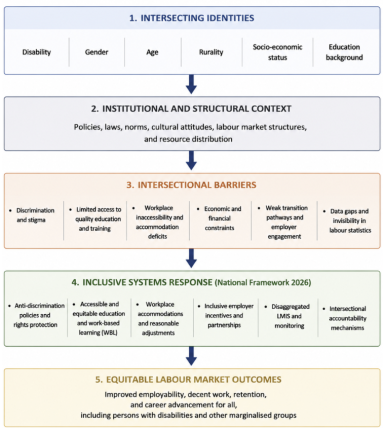
Figure 1 illustrates the institutional architecture of skills governance, it does not explicitly account for how opportunities and constraints are distributed across different social positions.
Figure 2, therefore, extends the systems model by integrating structural inclusion as a co-determinant of equitable employability outcomes.
Figure 2. Intersectionality Framework for Inclusive Skills Development and Labour Participation.
Figure 2. Integrated Analytical Model of Systems Efficiency and Structural Inclusion. The figure illustrates how institutional coordination and structural inclusion interact to shape equitable employability outcomes. Source: Author's conceptualization integrating systems theory
| [3] | Bronfenbrenner, U. Making Human Beings Human: Bioecological Perspectives on Human Development. Thousand Oaks, CA: Sage Publications; 2005. |
[3]
and intersectionality scholarship
| [6] | Crenshaw, K. Demarginalizing the intersection of race and sex: A Black feminist critique of antidiscrimination doctrine, feminist theory and antiracist politics. In: Maschke K, editor. Feminist Legal Theories. New York, NY: Routledge; 2013. pp. 23-51. |
| [11] | Garland-Thomson, R. (2005). Feminist disability studies. Signs: Journal of Women in Culture and Society, 30(2), 1557-1587.
https://doi.org/10.1086/423352 |
[6, 11]
.
Figure 2 advances the argument that systems coherence alone is insufficient for equitable labour market outcomes. The upper dimension of the model represents institutional efficiency through governance coordination, work-based learning integration, and labour market information feedback. The lower dimension represents structural inclusion, incorporating gender, disability, socio-economic status, and neurodiversity as intersecting determinants of labour participation. The model proposes that equitable employability emerges only when systemic coordination intersects with inclusion safeguards. Absent this intersection, demand-driven reforms may enhance productivity metrics while simultaneously reproducing stratified labour outcomes. The figure thus operationalizes the theoretical integration guiding this study.
2.3. Theoretical Position of This Study
This study is positioned at the intersection of these two theoretical traditions. It does not treat inclusion as an auxiliary policy concern but as a structural dimension of systems performance. It therefore evaluates Tanzania’s demand-driven framework as a governance system whose legitimacy depends not only on economic responsiveness but on distributive justice.
3. Methodology
3.1. Research Design
This study adopts a qualitative systematic policy review design to critically interrogate Tanzania’s National Framework for Academia-Industry Collaboration in Skills Development and Employability. The choice of a systematic review approach is grounded in the need for methodological transparency, structured evidence synthesis, and analytical rigor when examining policy frameworks that operate at the intersection of governance, labour markets, and inclusion.
Unlike narrative literature reviews, systematic reviews employ explicit selection criteria, defined analytical procedures, and structured synthesis protocols to minimize bias and enhance methodological transparency and replicability
. Although systematic reviews are most commonly associated with quantitative health sciences research, their structured methodology has increasingly been adapted for qualitative and policy research, where conceptual synthesis rather than statistical aggregation is required.
The objective of this study is not to measure impact outcomes but to evaluate structural design coherence and inclusion integration within the Tanzanian framework. Therefore, a qualitative interpretive approach was adopted.
3.2. Data Sources and Selection Strategy
The review incorporated three categories of sources:
1) Primary Policy Documents
a) Tanzania's National Framework for Academia-Industry Collaboration in Skills Development and Employability
| [29] | United Republic of Tanzania (URT). (2026). National framework for academia-industry collaboration in skills development and employability. Ministry of Education. Retrieved from the Ministry of Education. Retrieved from the Ministry of Education website. |
[29]
b) National Strategy for Inclusive Education (2018-2021)
c) Relevant African Union and UNESCO policy instruments
2) Comparative International Skills Governance Literature
a) Germany's dual vocational system
| [7] | Deissinger, T., & Hellwig, S. (2005). Apprenticeships in Germany: Modernising the dual system. Education + Training, 47(4/5), 312-324.
https://doi.org/10.1108/00400910510601896 |
| [10] | Fürstenau, B., Pilz, M., Gonon, P. The Dual System of Vocational Education and Training in Germany: What Can Be Learnt About Education for (Other) Professions. In: Billett S, Harteis C, Gruber H, editors. International Handbook of Research in Professional and Practice-Based Learning. Dordrecht: Springer; 2014. pp. 427-460.
https://doi.org/10.1007/978-94-017-8902-8_16 |
[7, 10]
a) Singapore's SkillsFuture ecosystem
| [4] | Chia, Y., & Sheng, Y. Z. (2022). From lifelong learning to lifelong employability: How SkillsFuture has re-conceptualised higher education for the future of work. In Higher education and Job Employability (pp. 179-194). Springer.
https://doi.org/10.1007/978-3-031-05716-8_9 |
| [16] | Lim, Z. Y., Yap, J. H., Lai, J. W., Mokhtar, I. A., Yeo, D. J., & Cheong, K. H. (2024). Advancing lifelong learning in the digital age: A narrative review of Singapore’s SkillsFuture programme. Social Sciences, 13(2), 73.
https://doi.org/10.3390/socsci13020073 |
[4, 16]
b) African vocational and employment policy reforms
3) Inclusion, Disability, and Intersectionality Scholarship
a) Intersectionality theory
| [6] | Crenshaw, K. Demarginalizing the intersection of race and sex: A Black feminist critique of antidiscrimination doctrine, feminist theory and antiracist politics. In: Maschke K, editor. Feminist Legal Theories. New York, NY: Routledge; 2013. pp. 23-51. |
[6]
a) Disability and labour inequality research
| [22] | Parker, G., & Social Policy Research. (2007). Double discrimination? Gender and disability in access to the labour market. University of York SPRU. Retrieved from
https://www.york.ac.uk/business-society/research/spru/ |
| [23] | Pettinicchio, D., & Maroto, M. (2017). Employment outcomes among men and women with disabilities: How the intersection of gender and disability status shapes labor market inequality. In Research in Social Science and Disability (Vol. 10, pp. 3-33). Emerald Publishing.
https://doi.org/10.1108/S1479-354720170000010003 |
[22, 23]
b) Structural stigma and labour barriers
c) Gendered labour participation
A purposive sampling strategy was used to select sources that directly engaged with skills governance, labour market alignment, disability inclusion, or intersectional labour inequality. Purposive sampling is appropriate where the objective is theoretical depth rather than statistical generalization
| [9] | Etikan, I., Musa, S. A., & Alkassim, R. S. (2016). Comparison of convenience sampling and purposive sampling. American Journal of Theoretical and Applied Statistics, 5(1), 1-4.
https://doi.org/10.11648/j.ajtas.20160501.11 |
[9]
.
Inclusion criteria required that sources:
1) Address institutional skills governance or vocational reform;
2) Engage explicitly with labour market participation;
3) Contribute conceptually or empirically to disability or gendered labour analysis.
This structured selection strategy ensured that all included sources were directly relevant to the study's research question while maintaining consistency between the theoretical framework, analytical strategy, and policy evaluation objectives.
3.3. Analytical Strategy
The analysis proceeded in three sequential stages.
Stage 1: Structured Review Protocol
Guided by the systematic review framework proposed by Pollock and Berge
, the review followed four structured stages:
1) Definition of the research question;
2) Application of explicit inclusion and exclusion criteria;
3) Structured extraction of governance and inclusion variables; and
4) Cross-document comparison.
This systematic process enhanced methodological transparency and analytical consistency.
Stage 2: Thematic Analysis
Thematic analysis was employed to identify recurring structural patterns within the Tanzanian policy framework and the comparative literature. Following the thematic analysis framework developed by Braun and Clarke
, the analysis involved:
1) Familiarization with the policy documents;
2) Initial coding of governance, inclusion, financing, and accountability mechanisms;
3) Development of themes relating to:
a) Systems coherence;
b) Demand alignment;
c) Structural inclusion safeguards; and
d) Monitoring and enforcement gaps;
4) Refinement of themes through theoretical integration with systems theory and intersectionality.
Thematic analysis was selected because it enables in-depth interpretation of policy content while preserving the contextual meaning of governance and inclusion processes.
Stage 3: Comparative Policy Synthesis
To avoid evaluating Tanzania's framework in isolation, a structured comparative policy synthesis was undertaken. Comparative policy analysis enhances interpretive validity by situating national reforms within broader institutional and governance contexts
| [32] | Yin, R. K. (2018). Case study research and applications (Vol. 6). Thousand Oaks, CA: Sage. |
[32]
. Germany and Singapore were selected as paradigmatic examples of coordinated skills governance, while African disability and labour market studies provided contextually relevant perspectives for interpreting the Tanzanian framework.
The purpose of the comparison was not to rank policy systems but to undertake a structural analysis of institutional design by identifying inclusion mechanisms embedded within comparative governance models and assessing whether equivalent provisions are incorporated into Tanzania's National Framework for Academia-Industry Collaboration.
The sequential application of these three analytical stages enhanced the credibility of the review by ensuring that policy documents were examined systematically, interpreted through established theoretical frameworks, and contextualized using comparative international evidence.
3.4. Analytical Framework Integration
The methodological design is aligned with the dual theoretical framework outlined earlier:
1) Systems theory guided the evaluation of governance architecture, coordination mechanisms, and institutional reciprocity.
2) Intersectionality and disability studies guided the analysis of distributive effects and structural inequality.
This dual-lens approach ensured that the evaluation did not privilege efficiency metrics over equity considerations.
The sequential application of these three analytical stages enhanced the credibility of the review by ensuring that policy documents were examined systematically, interpreted through established theoretical frameworks, and contextualized using comparative international evidence.
3.5. Methodological Reflexivity and Limitations
This study is document-based and therefore evaluates policy design rather than implementation outcomes. While document analysis allows deep structural interrogation, it does not capture lived experience or institutional practice variations. However, given that governance architecture precedes implementation dynamics, design analysis remains analytically justified at this stage.
A further limitation relates to the nature of policy document analysis itself. National policy frameworks represent formal institutional intentions and regulatory commitments, which may not fully reflect implementation practices across different sectors or geographical contexts. Consequently, the findings of this study should be interpreted as an assessment of policy design and institutional architecture rather than an evaluation of implementation effectiveness or labour market outcomes. Future research could strengthen these findings through empirical investigations involving policymakers, employers, education providers, and persons with disabilities to examine how the framework is implemented in practice and identify barriers or enabling factors influencing inclusive skills development.
Additionally, the review is theoretically driven rather than exhaustive of all available literature. The purposive sampling strategy prioritizes conceptual relevance over comprehensiveness.
4. International Comparative Models
To situate Tanzania’s framework within broader institutional practice, a structured qualitative comparison was undertaken. The comparison is not normative ranking but analytical positioning, guided by systems theory and inclusion scholarship.
Four structural criteria were used:
1) Legal embedding - the extent to which skills governance is institutionalized through binding legislation rather than advisory coordination.
2) Inclusion financing - the presence of explicit financial mechanisms supporting marginalized participation (e.g., levy-grants, accommodation funding, lifelong learning credits).
3) LMIS integration - the degree to which labour market data directly informs training design and enrolment planning.
4) Employer accountability - whether employer participation is legally mandated, incentivized, or consultative.
These analytical criteria are grounded in the comparative vocational governance literature
| [7] | Deissinger, T., & Hellwig, S. (2005). Apprenticeships in Germany: Modernising the dual system. Education + Training, 47(4/5), 312-324.
https://doi.org/10.1108/00400910510601896 |
| [10] | Fürstenau, B., Pilz, M., Gonon, P. The Dual System of Vocational Education and Training in Germany: What Can Be Learnt About Education for (Other) Professions. In: Billett S, Harteis C, Gruber H, editors. International Handbook of Research in Professional and Practice-Based Learning. Dordrecht: Springer; 2014. pp. 427-460.
https://doi.org/10.1007/978-94-017-8902-8_16 |
| [16] | Lim, Z. Y., Yap, J. H., Lai, J. W., Mokhtar, I. A., Yeo, D. J., & Cheong, K. H. (2024). Advancing lifelong learning in the digital age: A narrative review of Singapore’s SkillsFuture programme. Social Sciences, 13(2), 73.
https://doi.org/10.3390/socsci13020073 |
[7, 10, 16]
and disability-inclusive labour market research
.
Table 1. Comparative Skills Governance Models.
Country | Legal Embedding | Inclusion Financing | LMIS Integration | Employer Accountability |
Germany | Strong (statutory apprenticeship law) | Moderate | High | High (binding contracts) |
Singapore | Strong (statutory SkillsFuture framework) | High (national training credits) | Very High | High |
South Africa | Moderate (Skills Development Act & SETAs) | Targeted equity funding | Moderate | Moderate |
Tanzania | Emerging (framework-based coordination) | Weak | Emerging | Advisory |
Source: Author's synthesis based on comparative vocational governance literature
| [7] | Deissinger, T., & Hellwig, S. (2005). Apprenticeships in Germany: Modernising the dual system. Education + Training, 47(4/5), 312-324.
https://doi.org/10.1108/00400910510601896 |
| [10] | Fürstenau, B., Pilz, M., Gonon, P. The Dual System of Vocational Education and Training in Germany: What Can Be Learnt About Education for (Other) Professions. In: Billett S, Harteis C, Gruber H, editors. International Handbook of Research in Professional and Practice-Based Learning. Dordrecht: Springer; 2014. pp. 427-460.
https://doi.org/10.1007/978-94-017-8902-8_16 |
| [16] | Lim, Z. Y., Yap, J. H., Lai, J. W., Mokhtar, I. A., Yeo, D. J., & Cheong, K. H. (2024). Advancing lifelong learning in the digital age: A narrative review of Singapore’s SkillsFuture programme. Social Sciences, 13(2), 73.
https://doi.org/10.3390/socsci13020073 |
[7, 10, 16]
, skills development research from South Africa
| [17] | Matha, Q. P., & Jahed, M. I. (2024). A Critique of the Techniques Used by the Sectoral Education and Training Authorities to Detect Skills Shortages in South Africa. Administratio Publica, 32(4), 156-175.
https://doi.org/10.61967/adminpub.2024.32.4.8 |
[17]
, disability-inclusive labour market analysis
, and Tanzania's National Framework for Academia-Industry Collaboration in Skills Development and Employability
| [29] | United Republic of Tanzania (URT). (2026). National framework for academia-industry collaboration in skills development and employability. Ministry of Education. Retrieved from the Ministry of Education. Retrieved from the Ministry of Education website. |
[29]
.
Germany’s dual system demonstrates legally embedded apprenticeship contracts and employer co-certification authority. Singapore institutionalizes labour analytics and lifelong learning credits within a centralized governance structure. South Africa operates levy-funded sector bodies with targeted equity provisions. Tanzania’s framework establishes a coordination architecture but does not embed employer obligations or structured inclusion financing mechanisms at comparable depth.
5. Inclusion and Labour Participation
The presumption that vocational expansion automatically improves labour market outcomes has been consistently challenged in disability and labour inequality scholarship. Evidence suggests that skills acquisition alone does not neutralize structural barriers embedded within labour institutions. In South Africa, although Sector Education and Training Authorities (SETAs) have strengthened institutional coordination for skills development, challenges in identifying labour market skills needs and aligning training with workforce demand continue to constrain the effectiveness of the skills development system
| [17] | Matha, Q. P., & Jahed, M. I. (2024). A Critique of the Techniques Used by the Sectoral Education and Training Authorities to Detect Skills Shortages in South Africa. Administratio Publica, 32(4), 156-175.
https://doi.org/10.61967/adminpub.2024.32.4.8 |
[17]
. Similarly, research from Ghana identifies persistent disability stigma and discriminatory employment practices that continue to undermine the transition from education to employment despite improvements in educational access
| [20] | Naami, A. (2015). Disability, gender, and employment relationships in Africa: The case of Ghana. African Journal of Disability, 4(1), 1-11. https://doi.org/10.4102/ajod.v4i1.95 |
| [21] | Ocran, I. (2021). “There is something like a barrier”: Disability stigma, structural discrimination and middle-class persons with disability in Ghana. Disability & Society, 36(2), 255-275.
https://doi.org/10.1080/23311886.2022.2084893 |
[20, 21]
. Together, these findings suggest that expanding vocational education alone is insufficient unless accompanied by structural inclusion measures that address barriers within labour market institutions.
Intersectionality research further complicates the relationship between skills development and labour market participation. Pettinicchio and Maroto
| [23] | Pettinicchio, D., & Maroto, M. (2017). Employment outcomes among men and women with disabilities: How the intersection of gender and disability status shapes labor market inequality. In Research in Social Science and Disability (Vol. 10, pp. 3-33). Emerald Publishing.
https://doi.org/10.1108/S1479-354720170000010003 |
[23]
demonstrate that disability intersects with gender to produce differentiated employment outcomes even when educational attainment is comparable. Parker
conceptualizes this phenomenon as "double discrimination," while Crenshaw's intersectionality framework
| [6] | Crenshaw, K. Demarginalizing the intersection of race and sex: A Black feminist critique of antidiscrimination doctrine, feminist theory and antiracist politics. In: Maschke K, editor. Feminist Legal Theories. New York, NY: Routledge; 2013. pp. 23-51. |
[6]
explains how formally neutral institutional arrangements may reproduce layered forms of disadvantage. Collectively, these findings suggest that demand-driven skills development reforms may disproportionately benefit individuals who are already advantageously positioned within existing labour market structures.
Structural constraints extend beyond discrimination. The World Bank
identifies recurrent barriers to disability-inclusive labour market participation in Sub-Saharan Africa, including workplace inaccessibility, stigma, the absence of disability-disaggregated labour market data, and weak employer incentive mechanisms. Without systematic data collection and financing mechanisms to support reasonable accommodation, labour market inclusion remains contingent rather than institutionalized. Schur et al.
| [25] | Schur, L., Nishii, L., Adya, M., Kruse, D., Bruyère, S. M., & Blanck, P. (2014). Accommodating employees with and without disabilities. Human Resource Management, 53(4), 593-621.
https://doi.org/10.1002/hrm.21607 |
[25]
further demonstrate that employer-provided reasonable accommodations significantly improve employee retention and productivity, challenging the assumption that workplace inclusion imposes excessive cost burdens.
Gendered labour dynamics further intensify these patterns. Care responsibilities, disproportionately borne by women, constrain labour market participation and career progression, particularly where social protection systems are limited
. When disability intersects with gendered caregiving responsibilities, labour market exclusion becomes structurally reinforced
| [23] | Pettinicchio, D., & Maroto, M. (2017). Employment outcomes among men and women with disabilities: How the intersection of gender and disability status shapes labor market inequality. In Research in Social Science and Disability (Vol. 10, pp. 3-33). Emerald Publishing.
https://doi.org/10.1108/S1479-354720170000010003 |
[23]
. Disability studies scholars further argue that institutional systems frequently privilege normative productivity standards that marginalize diverse embodied and cognitive experiences
.
Taken together, the literature suggests that inclusive labour participation depends not merely on alignment efficiency but on embedded structural safeguards. Demand-driven skills reforms that lack enforceable inclusion mechanisms risk reproducing stratified employment outcomes rather than transforming them.
The literature on disability and labour participation consistently identifies recurring structural barriers that mediate the translation of skills acquisition into employment outcomes.
Table 2 synthesizes key empirical findings and their implications for skills governance reform.
Table 2. Structural Barriers to Disability-Inclusive Labour Participation Identified in Empirical Literature.
Structural Barrier | Nature of the Barrier | Empirical or Theoretical Contribution | Implication for Skills Reform | Proposed Policy Intervention |
Structural discrimination and stigma | Persistent negative perceptions and institutional bias are affecting hiring and retention | Ocran | [21] | Ocran, I. (2021). “There is something like a barrier”: Disability stigma, structural discrimination and middle-class persons with disability in Ghana. Disability & Society, 36(2), 255-275.
https://doi.org/10.1080/23311886.2022.2084893 |
[21] | Skills alignment alone is insufficient without anti-discrimination safeguards | Strengthen enforcement of anti-discrimination legislation, employer awareness programmes, and inclusive recruitment policies. |
Intersectional “double disadvantage.” | Compounded exclusion at the intersection of disability and gender | | Inclusion policies must address intersecting identities, not single-category targeting | Develop intersectional monitoring indicators and targeted employment programmes for women and persons with disabilities. |
Accommodation deficits | Lack of reasonable workplace adjustments limits productivity and retention | Gender-disability employment inequality | [23] | Pettinicchio, D., & Maroto, M. (2017). Employment outcomes among men and women with disabilities: How the intersection of gender and disability status shapes labor market inequality. In Research in Social Science and Disability (Vol. 10, pp. 3-33). Emerald Publishing.
https://doi.org/10.1108/S1479-354720170000010003 |
[23] Reasonable accommodations improve job retention and productivity | [25] | Schur, L., Nishii, L., Adya, M., Kruse, D., Bruyère, S. M., & Blanck, P. (2014). Accommodating employees with and without disabilities. Human Resource Management, 53(4), 593-621.
https://doi.org/10.1002/hrm.21607 |
[25] | Financing and regulatory mechanisms for accommodation are essential | Introduce employer incentives, accommodation funds, and workplace accessibility standards. |
Weak inclusive education-to-work pipeline | Limited transition structures linking inclusive education to employment | Inclusive education implementation challenges ; transition-to-work weaknesses in Sub-Saharan Africa . | Skills frameworks must integrate transition planning and data tracking | Institutionalize transition planning, work-based learning pathways, and disability-disaggregated labour market information systems. |
The synthesis demonstrates that barriers to labour inclusion operate at institutional, intersectional, and structural levels. The proposed policy interventions summarized in
Table 2 illustrate that addressing these barriers requires coordinated action across legislation, institutional governance, employer practices, and labour market monitoring systems rather than isolated policy measures. These findings reinforce the argument that demand-driven reforms must embed inclusion mechanisms within governance architecture rather than treating access as an auxiliary objective.
6. Neurodiversity and Autism in Skills Governance
Neurodiversity has emerged as a critical frontier in contemporary labour market inclusion debates, challenging conventional assumptions about competence, productivity, and workplace design. Autism spectrum conditions, estimated to affect approximately 1 in 100 children globally, affect millions of individuals across the lifespan
. Despite growing recognition of the strengths and abilities of autistic people, they continue to experience substantial barriers to employment and workplace inclusion
. However, the employment gap cannot be reduced to an individual deficit. Increasingly, scholarship situates the exclusion of autistic people within institutional and relational dynamics rather than intrinsic incapacity
.
Doyle
| [8] | Doyle, N. (2020). Neurodiversity at work: A biopsychosocial model and the impact on working adults. British Medical Bulletin, 135(1), 108-125. https://doi.org/10.1093/bmb/ldaa021 |
[8]
advances a biopsychosocial model of neurodiversity at work, arguing that workplace performance outcomes are co-produced by individual characteristics and organizational environments. This perspective shifts the analytical focus from individual impairment to organizational design and workplace inclusion. Milton's "double empathy problem"
further challenges deficit-based interpretations by proposing that communication difficulties between neurotypical and neurodivergent individuals are reciprocal rather than unilateral. Collectively, these perspectives question productivity systems that are structured around normative expectations of communication and social interaction.
Empirical research further complicates the exclusion narrative by demonstrating that autistic individuals often exhibit strengths in pattern recognition, attention to detail, and task persistence when workplace environments are appropriately structured
. However, successful employment outcomes depend not only on individual capabilities but also on organizational support, including inclusive workplace practices, appropriate job design, and supportive management
| [1] | Annabi, H., & Locke, J. (2019). A theoretical framework for investigating the context for creating employment success in information technology for individuals with autism. Journal of Management & Organization, 25(4), 499-515.
https://doi.org/10.1017/jmo.2018.79 |
| [8] | Doyle, N. (2020). Neurodiversity at work: A biopsychosocial model and the impact on working adults. British Medical Bulletin, 135(1), 108-125. https://doi.org/10.1093/bmb/ldaa021 |
[1, 8]
. Where work-based learning (WBL) pathways lack adaptive supervision and reasonable accommodation mechanisms, neurodivergent individuals are more likely to encounter barriers during recruitment, workplace transition, and internship opportunities.
Within the Tanzanian context, the Neurodiversity Internship Program implemented at Ubongo Learning provides an emerging example of how structured mentorship, workplace adaptation, and inclusive supervision can facilitate meaningful labour market participation for neurodivergent individuals
| [14] | Hussein, H. (2025b). The Neurodiversity Internship Program at Ubongo Learning, Tanzania: A model for promoting inclusion in employment. Indonesian Journal of Disability Studies, 12(2), 341-355. |
[14]
. This initiative illustrates that exclusion is not an inevitable consequence of neurodiversity but is substantially shaped by institutional design and workplace practices. However, Tanzania's National Framework for Academia-Industry Collaboration in Skills Development and Employability does not explicitly incorporate neurodiversity-responsive work-based learning (WBL) standards, employer guidance on workplace accommodations, or mechanisms to support inclusive supervision
| [29] | United Republic of Tanzania (URT). (2026). National framework for academia-industry collaboration in skills development and employability. Ministry of Education. Retrieved from the Ministry of Education. Retrieved from the Ministry of Education website. |
[29]
.
The implication is theoretically significant. If skills governance prioritizes employer-defined productivity without embedding adaptive supervisory and communication frameworks, neurodivergent candidates may remain structurally marginalized despite credential acquisition. Thus, neurodiversity extends the inclusion debate beyond access to training; it compels reconsideration of the normative assumptions embedded within demand-driven labour alignment itself.
7. Tanzania Empirical Context: The Education-Labour Transition Gap
Tanzania's commitment to inclusive education is formally articulated in the National Strategy for Inclusive Education (2018-2021)
, which advances the principles of equitable access, participation, and non-discrimination within the education system. The strategy aligns with international commitments to inclusive education by emphasizing the removal of barriers to learning and participation at the school level. However, its primary focus remains on basic and secondary education, with limited attention to structured post-school transition pathways linking education, skills development, and employment.
This fragmentation is not unique to Tanzania but reflects a broader policy discontinuity between inclusive education frameworks and labour market governance structures. Evidence from Tanzania indicates that children and young people with disabilities continue to encounter barriers to participation across education and subsequent pathways to skills development and employment
. The absence of coordinated tracking systems, structured work-based learning (WBL) pathways, and employer incentive mechanisms contributes to what may be described as systemic leakage, a progressive narrowing of participation as individuals move along the education-to-employment continuum.
From a systems theory perspective, this gap reflects weak vertical integration between education and labour market subsystems
| [3] | Bronfenbrenner, U. Making Human Beings Human: Bioecological Perspectives on Human Development. Thousand Oaks, CA: Sage Publications; 2005. |
| [12] | Härkönen, U. (2001). The Bronfenbrenner ecological systems theory of human development. |
[3, 12]
. As a result, inclusive education operates largely independently of labour market institutions, limiting continuity across the education-to-employment continuum. Without effective feedback mechanisms linking educational outcomes to industry engagement, inclusive access during earlier stages of education does not automatically translate into equitable labour market participation. Intersectionality scholarship further suggests that where transition support systems are weak, individuals positioned at the intersection of disability, gender, and socio-economic disadvantage experience compounded forms of exclusion
| [6] | Crenshaw, K. Demarginalizing the intersection of race and sex: A Black feminist critique of antidiscrimination doctrine, feminist theory and antiracist politics. In: Maschke K, editor. Feminist Legal Theories. New York, NY: Routledge; 2013. pp. 23-51. |
| [23] | Pettinicchio, D., & Maroto, M. (2017). Employment outcomes among men and women with disabilities: How the intersection of gender and disability status shapes labor market inequality. In Research in Social Science and Disability (Vol. 10, pp. 3-33). Emerald Publishing.
https://doi.org/10.1108/S1479-354720170000010003 |
[6, 23]
.
The empirical challenge, therefore, is not merely access to schooling but continuity across the skills pipeline. Where inclusive education policy is not structurally linked to work-based learning (WBL), labour market information systems, and employer accountability frameworks, participation gains at foundational levels dissipate before labour integration occurs. In this context, Tanzania’s National Framework for Academia-Industry Collaboration represents a potential bridge. However, the degree to which it explicitly integrates disability-responsive transition mechanisms remains analytically underexamined.
8. Discussion
The analysis indicates that Tanzania's National Framework for Academia-Industry Collaboration in Skills Development and Employability reflects a governance logic consistent with contemporary demand-driven skills development paradigms. By institutionalizing sector coordination mechanisms, expanding work-based learning (WBL) opportunities, and proposing Labour Market Information Systems (LMIS), the framework aligns with international efforts to reduce the credential-employment disjuncture observed across Sub-Saharan Africa
. From a systems theory perspective, the framework demonstrates considerable structural ambition by recognizing that employability outcomes emerge through interactions among educational institutions, regulatory bodies, and industry actors rather than through isolated curricular reforms
| [3] | Bronfenbrenner, U. Making Human Beings Human: Bioecological Perspectives on Human Development. Thousand Oaks, CA: Sage Publications; 2005. |
| [12] | Härkönen, U. (2001). The Bronfenbrenner ecological systems theory of human development. |
[3, 12]
.
However, comparative vocational governance scholarship suggests that institutional coordination alone does not guarantee systemic coherence or long-term stability. In Germany's dual vocational education and training (VET) system, employer participation is legally embedded through apprenticeship contracts, shared governance arrangements, and chamber-based certification processes, creating reciprocal accountability between training institutions and industry
| [7] | Deissinger, T., & Hellwig, S. (2005). Apprenticeships in Germany: Modernising the dual system. Education + Training, 47(4/5), 312-324.
https://doi.org/10.1108/00400910510601896 |
| [10] | Fürstenau, B., Pilz, M., Gonon, P. The Dual System of Vocational Education and Training in Germany: What Can Be Learnt About Education for (Other) Professions. In: Billett S, Harteis C, Gruber H, editors. International Handbook of Research in Professional and Practice-Based Learning. Dordrecht: Springer; 2014. pp. 427-460.
https://doi.org/10.1007/978-94-017-8902-8_16 |
[7, 10]
. Similarly, Singapore's SkillsFuture model integrates labour market analytics with statutory governance arrangements and sustainable financing mechanisms to ensure that skills alignment is both evidence-informed and institutionally supported
| [16] | Lim, Z. Y., Yap, J. H., Lai, J. W., Mokhtar, I. A., Yeo, D. J., & Cheong, K. H. (2024). Advancing lifelong learning in the digital age: A narrative review of Singapore’s SkillsFuture programme. Social Sciences, 13(2), 73.
https://doi.org/10.3390/socsci13020073 |
[16]
. In both cases, system coherence is reinforced through legally embedded responsibilities, institutional accountability, and structured incentives rather than advisory engagement alone.
When Tanzania's National Framework for Academia-Industry Collaboration in Skills Development and Employability is examined through an intersectionality-informed inclusion lens, a critical asymmetry becomes evident. While governance coordination mechanisms are articulated with relative clarity, structural safeguards for equitable participation are less explicitly embedded. Intersectionality scholarship argues that labour markets are not neutral systems of resource allocation but are shaped by intersecting structures of gender, disability, and socio-economic inequality
| [6] | Crenshaw, K. Demarginalizing the intersection of race and sex: A Black feminist critique of antidiscrimination doctrine, feminist theory and antiracist politics. In: Maschke K, editor. Feminist Legal Theories. New York, NY: Routledge; 2013. pp. 23-51. |
[6]
. Empirical evidence further demonstrates that disability intersects with gender to produce differentiated employment outcomes even when educational attainment is comparable
| [23] | Pettinicchio, D., & Maroto, M. (2017). Employment outcomes among men and women with disabilities: How the intersection of gender and disability status shapes labor market inequality. In Research in Social Science and Disability (Vol. 10, pp. 3-33). Emerald Publishing.
https://doi.org/10.1108/S1479-354720170000010003 |
[23]
. Consequently, demand-driven skills alignment may improve aggregate employability outcomes without necessarily ensuring equitable participation across intersecting social identities.
This finding suggests that institutional coordination, while necessary, is insufficient unless accompanied by explicit governance mechanisms that promote equitable participation across diverse population groups.
The absence of disability-disaggregated labour market data within Tanzania's National Framework for Academia-Industry Collaboration in Skills Development and Employability further constrains its capacity for monitoring and evaluation. Without systematic data collection and tracking, transition gaps affecting persons with disabilities are likely to remain obscured within aggregate labour market statistics
. Likewise, the limited attention given to financing mechanisms for reasonable workplace accommodations raises concerns about the practical accessibility of work-based learning (WBL) opportunities. Evidence demonstrates that employer-provided reasonable accommodations significantly improve employee retention and productivity
| [25] | Schur, L., Nishii, L., Adya, M., Kruse, D., Bruyère, S. M., & Blanck, P. (2014). Accommodating employees with and without disabilities. Human Resource Management, 53(4), 593-621.
https://doi.org/10.1002/hrm.21607 |
[25]
, suggesting that inclusive labour market participation depends on institutional support mechanisms rather than discretionary employer goodwill.
These limitations have important implications for neurodiversity-responsive governance. Research on neurodiversity in employment demonstrates that workplace outcomes are shaped not only by individual capabilities but also by organizational practices, supervisory approaches, and communication environments
. In the absence of neurodiversity-responsive work-based learning (WBL) guidelines and inclusive workplace standards, demand-driven skills systems risk reinforcing normative productivity expectations that marginalize cognitive diversity.
The central issue, therefore, is not the legitimacy of demand-driven reform but its sufficiency. Systems coherence enhances efficiency; however, without legally embedded inclusion mechanisms, disability-responsive governance, and structured financing instruments, efficiency gains may coexist with stratified labour market participation. Tanzania's National Framework for Academia-Industry Collaboration in Skills Development and Employability, therefore, occupies a pivotal policy juncture. While it establishes an important institutional architecture for coordination, the sustainability, inclusiveness, and equity of its outcomes will ultimately depend on whether inclusion safeguards are embedded as core governance components rather than supplementary considerations. Taken together, these findings suggest that demand-driven skills development reforms cannot achieve equitable labour market outcomes through institutional coordination alone. Rather, they must embed explicit governance mechanisms that promote accessibility, accountability, equitable participation, and institutional responsiveness across diverse learner and worker populations.
9. Conclusion and Policy Implications
Tanzania’s National Framework for Academia-Industry Collaboration constitutes a significant institutional intervention within the broader shift toward demand-driven skills governance across Sub-Saharan Africa. Its emphasis on sector coordination, work-based learning, and labour market responsiveness reflects recognition that employability outcomes are systemically produced rather than individually determined. From a governance perspective, the framework establishes foundational architecture for aligning education with economic transformation priorities.
However, comparative vocational systems and intersectional labour research demonstrate that alignment efficiency alone is insufficient to secure equitable participation. Where inclusion safeguards are not structurally embedded, demand-driven reforms may enhance aggregate employment indicators while leaving patterned inequalities intact. Disability-disaggregated labour market information systems, structured employer accommodation incentives, and enforceable accessibility standards are not peripheral enhancements but core determinants of distributive outcomes. Without such mechanisms, transition pathways from education to employment risk privileging those already positioned advantageously within labour hierarchies.
The analysis, therefore, suggests that the next phase of reform must move beyond coordination toward institutionalization. Integrating disability-disaggregated LMIS reporting would strengthen evaluative accountability; embedding levy-based or fiscal incentives for inclusive employers would align productivity objectives with equity commitments; mandating accessible work-based learning standards would ensure that transition structures are operationally inclusive; and incorporating intersectional monitoring indicators would prevent aggregate performance metrics from obscuring stratified participation patterns. Additionally, institutional guidance on neurodiversity-responsive supervision models would recalibrate productivity norms within emerging sectors of the economy.
In this sense, Tanzania stands not at the beginning of reform but at a structural inflection point. The framework has laid the groundwork for coordinated skills governance. Its long-term legitimacy, however, will depend on whether inclusion is integrated as a constitutive principle of system design rather than appended as a supplementary objective. If efficiency and equity are institutionally coupled, demand-driven skills governance can contribute not only to economic growth but to equitable labour participation across intersecting social positions.
Abbreviations
LMIS | Labour Market Information System |
SETAs | Sector Education and Training Authorities |
WBL | Work-Based Learning |
NSCC | National Skills Coordination Council |
SSC | Sector Skills Councils |
Author Contributions
Hussein Hussein: Conceptualization, Formal Analysis, Methodology, Writing – original draft, Writing – review & editing
Conflicts of Interest
The author declares no conflict of interest.
References
| [1] |
Annabi, H., & Locke, J. (2019). A theoretical framework for investigating the context for creating employment success in information technology for individuals with autism. Journal of Management & Organization, 25(4), 499-515.
https://doi.org/10.1017/jmo.2018.79
|
| [2] |
Braun, V., & Clarke, V. (2006). Using thematic analysis in psychology. Qualitative Research in Psychology, 3(2), 77-101.
https://doi.org/10.1191/1478088706qp063oa
|
| [3] |
Bronfenbrenner, U. Making Human Beings Human: Bioecological Perspectives on Human Development. Thousand Oaks, CA: Sage Publications; 2005.
|
| [4] |
Chia, Y., & Sheng, Y. Z. (2022). From lifelong learning to lifelong employability: How SkillsFuture has re-conceptualised higher education for the future of work. In Higher education and Job Employability (pp. 179-194). Springer.
https://doi.org/10.1007/978-3-031-05716-8_9
|
| [5] |
Cope, R., & Remington, A. (2022). The strengths and abilities of autistic people in the workplace. Autism in Adulthood, 4(1), 22-31.
https://doi.org/10.1089/aut.2021.0037
|
| [6] |
Crenshaw, K. Demarginalizing the intersection of race and sex: A Black feminist critique of antidiscrimination doctrine, feminist theory and antiracist politics. In: Maschke K, editor. Feminist Legal Theories. New York, NY: Routledge; 2013. pp. 23-51.
|
| [7] |
Deissinger, T., & Hellwig, S. (2005). Apprenticeships in Germany: Modernising the dual system. Education + Training, 47(4/5), 312-324.
https://doi.org/10.1108/00400910510601896
|
| [8] |
Doyle, N. (2020). Neurodiversity at work: A biopsychosocial model and the impact on working adults. British Medical Bulletin, 135(1), 108-125.
https://doi.org/10.1093/bmb/ldaa021
|
| [9] |
Etikan, I., Musa, S. A., & Alkassim, R. S. (2016). Comparison of convenience sampling and purposive sampling. American Journal of Theoretical and Applied Statistics, 5(1), 1-4.
https://doi.org/10.11648/j.ajtas.20160501.11
|
| [10] |
Fürstenau, B., Pilz, M., Gonon, P. The Dual System of Vocational Education and Training in Germany: What Can Be Learnt About Education for (Other) Professions. In: Billett S, Harteis C, Gruber H, editors. International Handbook of Research in Professional and Practice-Based Learning. Dordrecht: Springer; 2014. pp. 427-460.
https://doi.org/10.1007/978-94-017-8902-8_16
|
| [11] |
Garland-Thomson, R. (2005). Feminist disability studies. Signs: Journal of Women in Culture and Society, 30(2), 1557-1587.
https://doi.org/10.1086/423352
|
| [12] |
Härkönen, U. (2001). The Bronfenbrenner ecological systems theory of human development.
|
| [13] |
Hussein, H. (2025). Disability and gender: Analyzing the double disadvantage in education and employment. Indonesian Journal of Disability Studies, 12(1), 13-25.
https://doi.org/10.21776/ub.ijds.2025.12.1.2
|
| [14] |
Hussein, H. (2025b). The Neurodiversity Internship Program at Ubongo Learning, Tanzania: A model for promoting inclusion in employment. Indonesian Journal of Disability Studies, 12(2), 341-355.
|
| [15] |
JAMA Health Forum. (2023). The gendered burden of caregiving: Implications for women’s health and employment. JAMA Health Forum, 4(6), e231089.
https://jamanetwork.com/journals/jama-health-forum/fullarticle/2805890
|
| [16] |
Lim, Z. Y., Yap, J. H., Lai, J. W., Mokhtar, I. A., Yeo, D. J., & Cheong, K. H. (2024). Advancing lifelong learning in the digital age: A narrative review of Singapore’s SkillsFuture programme. Social Sciences, 13(2), 73.
https://doi.org/10.3390/socsci13020073
|
| [17] |
Matha, Q. P., & Jahed, M. I. (2024). A Critique of the Techniques Used by the Sectoral Education and Training Authorities to Detect Skills Shortages in South Africa. Administratio Publica, 32(4), 156-175.
https://doi.org/10.61967/adminpub.2024.32.4.8
|
| [18] |
Meekosha, H. (2011). Decolonising disability: Thinking and acting globally. Disability & Society, 26(6), 667-682.
https://doi.org/10.1080/09687599.2011.602860
|
| [19] |
Milton, D. E. M. (2012). On the ontological status of autism: The “double empathy problem.” Disability & Society, 27(6), 883-887.
https://doi.org/10.1080/09687599.2012.710008
|
| [20] |
Naami, A. (2015). Disability, gender, and employment relationships in Africa: The case of Ghana. African Journal of Disability, 4(1), 1-11.
https://doi.org/10.4102/ajod.v4i1.95
|
| [21] |
Ocran, I. (2021). “There is something like a barrier”: Disability stigma, structural discrimination and middle-class persons with disability in Ghana. Disability & Society, 36(2), 255-275.
https://doi.org/10.1080/23311886.2022.2084893
|
| [22] |
Parker, G., & Social Policy Research. (2007). Double discrimination? Gender and disability in access to the labour market. University of York SPRU. Retrieved from
https://www.york.ac.uk/business-society/research/spru/
|
| [23] |
Pettinicchio, D., & Maroto, M. (2017). Employment outcomes among men and women with disabilities: How the intersection of gender and disability status shapes labor market inequality. In Research in Social Science and Disability (Vol. 10, pp. 3-33). Emerald Publishing.
https://doi.org/10.1108/S1479-354720170000010003
|
| [24] |
Pollock, A., & Berge, E. (2018). How to do a systematic review. International Journal of Stroke, 13(2), 138-156.
https://doi.org/10.1177/1747493017743796
|
| [25] |
Schur, L., Nishii, L., Adya, M., Kruse, D., Bruyère, S. M., & Blanck, P. (2014). Accommodating employees with and without disabilities. Human Resource Management, 53(4), 593-621.
https://doi.org/10.1002/hrm.21607
|
| [26] |
Spassiani, N. A., & Friedman, C. (2014). Stigma: Barriers to culture and identity for people with intellectual disability. Inclusion, 2(4), 329-341.
https://doi.org/10.1352/2326-6988-2.4.329
|
| [27] |
United Nations Children's Fund (UNICEF). Disability and Inclusion in Tanzania. Dar es Salaam, Tanzania: UNICEF; 2021. Available from:
https://www.unicef.org/tanzania
|
| [28] |
United Republic of Tanzania. National Strategy for Inclusive Education (2018-2021). Dodoma, Tanzania: Ministry of Education, Science and Technology; 2018. Retrieved from
https://www.rodra.co.za/images/countries/tanzania/policies/National%20Strategy%20for%20Inclusive%20Education_version%20for%20signing.pdf
|
| [29] |
United Republic of Tanzania (URT). (2026). National framework for academia-industry collaboration in skills development and employability. Ministry of Education. Retrieved from the Ministry of Education. Retrieved from the Ministry of Education website.
|
| [30] |
World Bank. (2023). Disability inclusion in the labor market: A review of barriers and opportunities in Sub-Saharan Africa. World Bank Group. Retrieved from
https://www.worldbank.org/ext/en/topic/social-development/disability-inclusion
|
| [31] |
World Health Organization. (2022). Autism spectrum disorders: Key facts.
https://www.who.int/news-room/fact-sheets/detail/autism-spectrum-disorders
|
| [32] |
Yin, R. K. (2018). Case study research and applications (Vol. 6). Thousand Oaks, CA: Sage.
|
Cite This Article
-
APA Style
Hussein, H. (2026). Towards Inclusive and Demand-Driven Skills Development: A Critical Review of Tanzania’s National Framework for Academia-Industry Collaboration. Innovation Economics, 1(4), 175-186. https://doi.org/10.11648/j.iecon.20260104.14
 Copy
|
 Download
ACS Style
Hussein, H. Towards Inclusive and Demand-Driven Skills Development: A Critical Review of Tanzania’s National Framework for Academia-Industry Collaboration. Innov. Econ. 2026, 1(4), 175-186. doi: 10.11648/j.iecon.20260104.14
Copy
|
Download
AMA Style
Hussein H. Towards Inclusive and Demand-Driven Skills Development: A Critical Review of Tanzania’s National Framework for Academia-Industry Collaboration. Innov Econ. 2026;1(4):175-186. doi: 10.11648/j.iecon.20260104.14
Copy
|
Download
-
@article{10.11648/j.iecon.20260104.14,
  author = {Hussein Hussein},
  title = {Towards Inclusive and Demand-Driven Skills Development: A Critical Review of Tanzania’s National Framework for Academia-Industry Collaboration},
  journal = {Innovation Economics},
  volume = {1},
  number = {4},
  pages = {175-186},
  doi = {10.11648/j.iecon.20260104.14},
  url = {https://doi.org/10.11648/j.iecon.20260104.14},
  eprint = {https://article.sciencepublishinggroup.com/pdf/10.11648.j.iecon.20260104.14},
  abstract = {Across Sub-Saharan Africa, persistent misalignment between education systems and labour market structures has constrained the translation of educational expansion into equitable employment outcomes. In response to graduate unemployment and skills mismatch, Tanzania introduced the National Framework for Academia-Industry Collaboration in Skills Development and Employability in 2026 to institutionalize governance coordination, strengthen work-based learning, and enhance labour market responsiveness. While the framework adopts a demand-driven orientation, the extent to which it embeds structural inclusion mechanisms remains insufficiently examined. This paper undertakes a systematic qualitative policy review of the framework to interrogate its governance architecture, demand-alignment logic, and inclusion provisions. Guided by systems theory, human capital perspectives, and intersectionality frameworks, the analysis evaluates the framework against international models of skills governance and labour inclusion. Findings indicate that the framework demonstrates structural coherence in institutional coordination and industry engagement; however, it lacks explicit disability-disaggregated labour data systems, employer accommodation financing mechanisms, and intersectional monitoring indicators necessary to prevent the reproduction of labour market inequalities. This study contributes to the literature by integrating systems theory with intersectionality-informed disability studies to evaluate skills governance beyond economic responsiveness alone. The paper argues that demand-driven skills development, when detached from legally embedded inclusion safeguards and disability-responsive financing instruments, risks reinforcing gendered and disability-based disparities in employment outcomes. It concludes that Tanzania’s framework constitutes a significant policy reform platform but requires structural integration of inclusive governance mechanisms to ensure equitable participation and sustainable employability in the evolving labour market. It concludes that Tanzania's framework provides a strong foundation for reform but should be strengthened through disability-responsive labour market information systems, employer accommodation incentives, accessible work-based learning standards, and intersectional accountability mechanisms to ensure inclusive and sustainable skills development.},
 year = {2026}
}
Copy
|
Download
-
TY  - JOUR
T1  - Towards Inclusive and Demand-Driven Skills Development: A Critical Review of Tanzania’s National Framework for Academia-Industry Collaboration
AU  - Hussein Hussein
Y1  - 2026/10/20
PY  - 2026
N1  - https://doi.org/10.11648/j.iecon.20260104.14
DO  - 10.11648/j.iecon.20260104.14
T2  - Innovation Economics
JF  - Innovation Economics
JO  - Innovation Economics
SP  - 175
EP  - 186
PB  - Science Publishing Group
SN  - 3071-4931
UR  - https://doi.org/10.11648/j.iecon.20260104.14
AB  - Across Sub-Saharan Africa, persistent misalignment between education systems and labour market structures has constrained the translation of educational expansion into equitable employment outcomes. In response to graduate unemployment and skills mismatch, Tanzania introduced the National Framework for Academia-Industry Collaboration in Skills Development and Employability in 2026 to institutionalize governance coordination, strengthen work-based learning, and enhance labour market responsiveness. While the framework adopts a demand-driven orientation, the extent to which it embeds structural inclusion mechanisms remains insufficiently examined. This paper undertakes a systematic qualitative policy review of the framework to interrogate its governance architecture, demand-alignment logic, and inclusion provisions. Guided by systems theory, human capital perspectives, and intersectionality frameworks, the analysis evaluates the framework against international models of skills governance and labour inclusion. Findings indicate that the framework demonstrates structural coherence in institutional coordination and industry engagement; however, it lacks explicit disability-disaggregated labour data systems, employer accommodation financing mechanisms, and intersectional monitoring indicators necessary to prevent the reproduction of labour market inequalities. This study contributes to the literature by integrating systems theory with intersectionality-informed disability studies to evaluate skills governance beyond economic responsiveness alone. The paper argues that demand-driven skills development, when detached from legally embedded inclusion safeguards and disability-responsive financing instruments, risks reinforcing gendered and disability-based disparities in employment outcomes. It concludes that Tanzania’s framework constitutes a significant policy reform platform but requires structural integration of inclusive governance mechanisms to ensure equitable participation and sustainable employability in the evolving labour market. It concludes that Tanzania's framework provides a strong foundation for reform but should be strengthened through disability-responsive labour market information systems, employer accommodation incentives, accessible work-based learning standards, and intersectional accountability mechanisms to ensure inclusive and sustainable skills development.
VL  - 1
IS  - 4
ER  -
Copy
|
Download





 Share This Article
 Twitter
 Linked In
 Facebook